Dental Bridges: Are They Still a Good Option in 2026?
Posted on 11/6/2026 by SRD Tuscumbia |
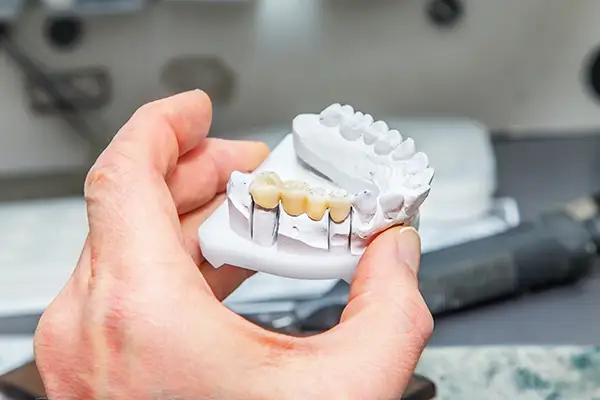 If you’ve lost a tooth or are facing the loss of one, you’re probably weighing dental bridges vs. implants and trying to figure out which option makes more sense for your situation in Tuscumbia, AL. Implants tend to get most of the attention these days, and for good reason. But that doesn’t mean bridges are obsolete. For the right patient, a dental bridge is still an excellent solution, with a long clinical track record and real advantages over implants in certain scenarios.
This guide walks through how bridges work, the types available today, and the specific situations where a bridge often beats an implant or vice versa. The goal is to give you the vocabulary and context to have a real conversation with your dentist, instead of arriving with a single solution already in mind.
On This Page
What a Dental Bridge Is and How It Works
 A dental bridge does exactly what the name suggests. It bridges a gap left by one or more missing teeth using a row of connected replacement teeth. The replacement tooth in the middle, called a pontic, sits in the space where your natural tooth used to be. It’s held in place by crowns on either side, which are cemented to either the natural teeth next to the gap or to dental implants.
Once a bridge is in, it’s fixed in place. You don’t remove it at night. You chew, speak, and smile with it just like natural teeth. With reasonable care, traditional bridges typically last around 10 to 15 years before they need to be replaced, though many last longer. Treatment usually takes two visits over a few weeks: one to prepare the anchor teeth and take impressions, and a second to bond the finished bridge in place.
The most important thing to understand at this stage: a traditional bridge requires the dentist to reshape the natural teeth on either side of the gap. That’s how the supporting crowns fit and stay anchored. It’s a tradeoff, and one of the central factors when comparing bridges and implants.
The Types of Dental Bridges
 Not all bridges are the same. The right type depends on which teeth are missing, how strong the surrounding teeth are, and what your long-term goals are. Here are the most common options you’ll hear about.
Traditional Bridge
The most familiar and widely used type. A pontic is suspended between two crowns that are bonded to the natural teeth on either side of the gap. Traditional bridges are well-tested, predictable, and a strong choice when the anchor teeth are healthy enough to support them, or already need crowns of their own.
Cantilever Bridge
A cantilever bridge is supported by only one anchor tooth instead of two. This is occasionally used when there’s a natural tooth on only one side of the gap, often toward the front of the mouth where chewing forces are lower. Because the load is concentrated on a single anchor, cantilever bridges are used selectively rather than as a default.
Maryland (Resin-Bonded) Bridge
A Maryland bridge uses a pontic with thin metal or porcelain wings on each side that are bonded to the backs of the adjacent teeth. The big advantage is that the anchor teeth aren’t reshaped, since the wings attach to the existing tooth surface. The tradeoff is that the bond is more delicate than a traditional crown-supported bridge, making this option best suited for replacing front teeth with lower chewing pressure.
Implant-Supported Bridge
Instead of being anchored to natural teeth, this bridge sits on two or more dental implants placed in the jawbone. It’s often used when several teeth in a row are missing and the patient wants to avoid placing an individual implant for every tooth. An implant-supported bridge also protects the adjacent natural teeth from being reshaped, and unlike a traditional bridge, it preserves jawbone in the area where the implants are placed.
When a Bridge Is the Better Choice
There are real situations where a bridge is the smarter call, not the consolation prize. The most common ones we see include:
| • |
The neighboring teeth already need crowns - If the teeth on either side of the gap are heavily filled, cracked, or worn, they may benefit from crowns anyway. Combining that work into a bridge is often the cleanest solution.
|
| • |
You’re not a candidate for implant surgery - Certain medical conditions, medications, or jawbone density issues can make implants a poor fit. A bridge can restore function and appearance without surgery.
|
| • |
You need a faster timeline - Implants involve healing and integration time. A bridge can often be finished in a few weeks, which matters before a wedding, a big event, or for someone who’s uncomfortable with a temporary gap.
|
| • |
You’re replacing a single tooth between two restorable teeth - When the anchor teeth are otherwise sound and you’d prefer to avoid surgery, a traditional bridge can be the right balance of stability and simplicity. |
For any of these reasons, the decision is rarely just clinical. It involves your goals, your timeline, and what you want to prioritize. That’s exactly the kind of conversation that should happen during your consultation, and reviewing your options after tooth loss is a useful step in making a confident decision.
When an Implant Is the Better Fit
There are equally clear situations where an implant has the advantage. The strongest case for an implant usually comes down to two factors: preserving the jaw and avoiding work on healthy adjacent teeth.
When a tooth is lost, the jawbone underneath it gradually shrinks because nothing is stimulating it during chewing. Implants are the only restoration option that replaces the root portion of the tooth and keeps the bone active. If you want to dig deeper, our team has a detailed overview of how implants prevent bone loss over time.
The second advantage is that implants don’t require touching the teeth on either side of the gap. If your neighboring teeth are completely healthy and unrestored, reshaping them for a bridge can feel like a steep tradeoff. Implants leave those teeth alone entirely. They also tend to last longer than bridges over a lifetime, and modern designs have a high long-term success rate when placed in candidates with good bone and gum health. For patients weighing other options, our implants vs. dentures comparison can also be a useful step in seeing the bigger picture.
Choosing What’s Right for You in Tuscumbia
Bridges and implants are both excellent tools when matched to the right situation. Our Singing River Dentistry team in Tuscumbia takes time to look at the specific gap, the condition of your surrounding teeth, your bone health, your timeline, and what you want from the final result before making a recommendation. To talk through your options, call 256-383-0377 or reach out to our Tuscumbia, AL office.
Frequently Asked Questions
How long does a dental bridge last?
A well-cared-for traditional bridge typically lasts around 10 to 15 years, and many last considerably longer. Lifespan depends on the health of the anchor teeth, oral hygiene at home, regular cleanings, and habits like teeth grinding. Implant-supported bridges tend to last even longer because they aren’t reliant on natural anchor teeth.
Will a dental bridge feel like natural teeth?
Most patients adjust to a bridge within a few days. Speech and chewing return to normal quickly, and modern materials match the color and shape of surrounding teeth closely. You won’t feel the bridge as a separate piece; it sits and functions as a connected unit with your natural bite.
Is getting a dental bridge uncomfortable?
The procedure is performed with local numbing medication, so you should feel pressure but not discomfort during the visit. After the anchor teeth are prepared, you may notice some sensitivity to hot or cold for a few days while you wear the temporary bridge. Once the final bridge is bonded in, most patients describe a quick return to normal.
Can a bridge be replaced with an implant later?
In many cases, yes, though it depends on the jawbone underneath. Once a tooth has been missing for years, some bone loss may have occurred in the area, and a bone graft might be needed before an implant can be placed. The conversation usually starts with an exam and a 3D scan to see exactly what the bone looks like.
How do I clean under a dental bridge?
Brushing is the same. Flossing is where things change, because regular floss can’t pass between the connected crowns. Most patients use a floss threader, a water flosser, or an interdental brush to clean under the pontic. Your hygienist can show you the technique that fits your bridge best.
Are bridges still worth considering compared to implants?
Absolutely. While implants have become a popular choice, bridges remain the right answer in many situations, especially when the anchor teeth already need crowns, when surgery isn’t a good option, or when a faster timeline matters. The right choice is the one that fits your mouth, your health, and your goals, not the one with the most marketing momentum.
|
|

