Sleep Apnea and Your Dentist: What's the Connection?
Posted on 7/16/2026 by SRD Tuscumbia |
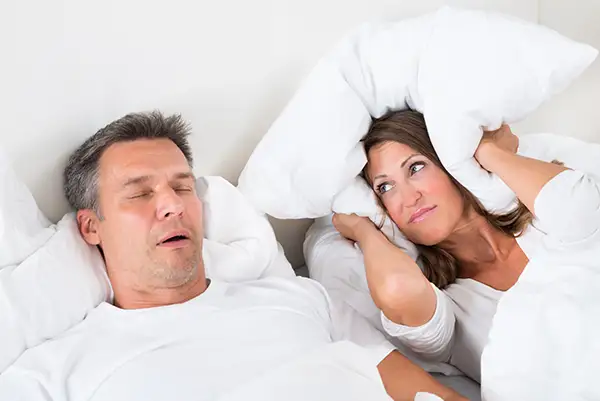 If you’ve been told you snore loudly, wake up gasping, or feel exhausted no matter how many hours you spend in bed, working with a dentist for sleep apnea may be more relevant than you think. Many people in Tuscumbia and the surrounding Shoals area assume sleep apnea is strictly a medical issue handled by a sleep physician. That’s only part of the picture. Modern dentistry plays a meaningful, evidence-supported role in helping certain patients breathe better at night, sleep more soundly, and protect long-term health. If you’ve been told you snore loudly, wake up gasping, or feel exhausted no matter how many hours you spend in bed, working with a dentist for sleep apnea may be more relevant than you think. Many people in Tuscumbia and the surrounding Shoals area assume sleep apnea is strictly a medical issue handled by a sleep physician. That’s only part of the picture. Modern dentistry plays a meaningful, evidence-supported role in helping certain patients breathe better at night, sleep more soundly, and protect long-term health.
At Singing River Dentistry, we regularly meet patients who didn’t realize their nightly snoring or daytime fatigue could be addressed through sleep apnea treatment involving their dentist. This article walks through what obstructive sleep apnea actually is, how to recognize the signs, where a dentist fits in (and where they don’t), and what oral appliance therapy looks like in practice.
On This Page
Understanding Obstructive Sleep Apnea
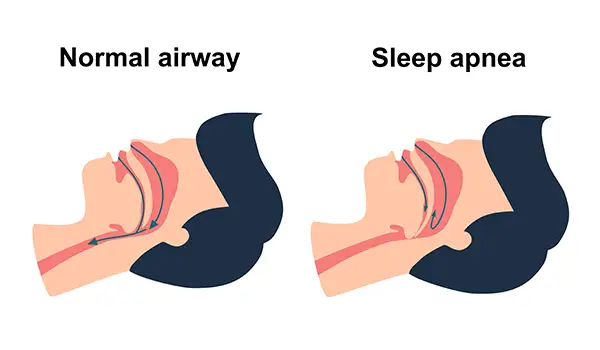 Obstructive sleep apnea (OSA) is the most common form of sleep-disordered breathing. It happens when the soft tissues at the back of the throat collapse or relax too much during sleep, narrowing or fully blocking the airway. The brain notices the drop in oxygen and briefly rouses you to restart breathing. This can repeat dozens or even hundreds of times a night, often without you remembering it in the morning. Obstructive sleep apnea (OSA) is the most common form of sleep-disordered breathing. It happens when the soft tissues at the back of the throat collapse or relax too much during sleep, narrowing or fully blocking the airway. The brain notices the drop in oxygen and briefly rouses you to restart breathing. This can repeat dozens or even hundreds of times a night, often without you remembering it in the morning.
What makes OSA tricky is that the cycle is invisible to the sleeper. You may feel like you slept seven hours, yet wake up unrefreshed because your body never reached the deep, uninterrupted rest it needed. Primary snoring is different: it’s noisy breathing without the repeated airway closures and oxygen dips that define apnea. Both can be addressed, but OSA carries health risks that primary snoring does not, which is why a proper evaluation matters.
Common Signs and Symptoms
Most people only learn they may have sleep apnea because a partner notices the breathing patterns. If you sleep alone, the clues can be easy to miss. We often see patients who chalk up their fatigue to age, stress, or a busy schedule when the underlying issue is disrupted sleep.
Common signals our team hears about include:
| • |
Loud, chronic snoring – especially with pauses or gasping sounds
|
| • |
Witnessed breathing stops – a partner reports you go quiet, then suddenly snort or jerk awake
|
| • |
Morning headaches – often dull and concentrated at the forehead
|
| • |
Daytime fatigue – falling asleep at red lights, in meetings, or while reading
|
| • |
Dry mouth or sore throat in the morning – from mouth breathing during airway struggles
|
| • |
Grinding or clenching – the body’s reflex to reopen a narrowed airway often shows up as bruxism
|
| • |
Irritability or trouble concentrating – cognitive effects of fragmented sleep |
Worn enamel, jaw soreness, and chipped restorations sometimes lead our team to ask about sleep before a patient ever brings it up. The connection between TMJ and jaw symptoms and disordered breathing is well documented, and nighttime teeth grinding frequently overlaps with undiagnosed apnea.
How Dentists Fit Into Sleep Apnea Care
A dentist does not diagnose sleep apnea. That responsibility belongs to a sleep physician, typically based on a sleep study (either an in-lab polysomnogram or an at-home test) interpreted by a board-certified sleep specialist. What dentists with sleep medicine training can do is help deliver one of the recommended treatments: oral appliance therapy.
Dentists are well-positioned for this work because the appliances live in the mouth and depend on precise jaw, bite, and dental positioning. From our Tuscumbia office, we coordinate with your physician so the treatment plan stays grounded in your medical diagnosis. A typical pathway looks like this: you describe symptoms during a dental visit, we discuss whether a sleep evaluation is appropriate, you complete that evaluation with a sleep physician, and if oral appliance therapy is the right fit, we step in to design, fit, and follow up on the device.
This collaborative model matters. Apnea has cardiovascular, metabolic, and cognitive consequences, so a dentist’s role is to complement medical care, not replace it.
CPAP vs. Oral Appliance Therapy
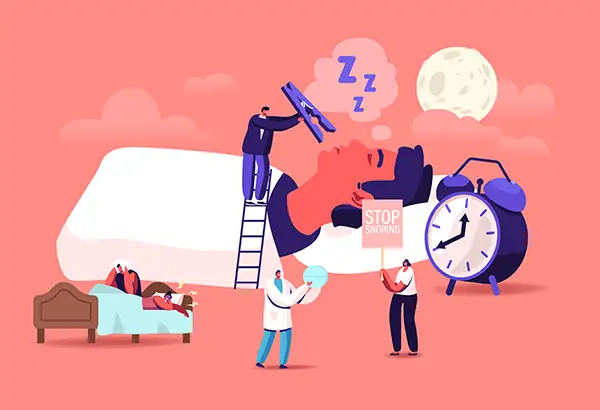 CPAP (continuous positive airway pressure) machines remain the gold-standard treatment for moderate-to-severe obstructive sleep apnea. A CPAP keeps the airway open by pushing a steady stream of pressurized air through a mask. When used consistently, it’s highly effective. The challenge is that some patients struggle to tolerate the mask, the noise, the dry-air sensation, or the feeling of constant pressure, and nightly use drops over time. CPAP (continuous positive airway pressure) machines remain the gold-standard treatment for moderate-to-severe obstructive sleep apnea. A CPAP keeps the airway open by pushing a steady stream of pressurized air through a mask. When used consistently, it’s highly effective. The challenge is that some patients struggle to tolerate the mask, the noise, the dry-air sensation, or the feeling of constant pressure, and nightly use drops over time.
That’s where oral appliance therapy can help. A dental sleep appliance, also called a mandibular advancement device, is a custom-fitted device worn at night. It gently holds the lower jaw slightly forward, which keeps the soft tissues at the back of the throat from collapsing into the airway. Think of it as easing a kink in a garden hose so air can flow freely.
Oral appliance therapy is generally considered appropriate for adults with mild-to-moderate OSA, for primary snoring without apnea, and for people with moderate-to-severe OSA who cannot tolerate CPAP. The American Academy of Sleep Medicine recognizes oral appliances as a first-line option in those scenarios. For more severe cases where CPAP is tolerated well, CPAP is still the better fit; in some patients, the two can even be combined.
There are practical reasons patients find oral appliances appealing: they’re quiet, travel easily, require no electricity or distilled water, and involve no mask. The trade-off is that they work best when carefully calibrated to your specific bite, which is exactly the kind of customization dentistry is built for.
What to Expect from the Appliance Process
The first visit is a conversation. Our team reviews your medical history, current sleep symptoms, any prior sleep study results, and your dental and jaw status. We look at tooth condition, gum health, bite alignment, and the range of motion in your jaw. Not everyone is a candidate for an oral appliance, and that screening matters.
If a sleep study has not been done, we coordinate that step with your physician before moving forward. Once a diagnosis is in hand and oral appliance therapy is the appropriate route, we take digital scans or impressions of your teeth so the lab can build a device shaped specifically to your mouth.
Fitting day involves placing the appliance, checking how it sits, and adjusting it so the lower jaw is positioned correctly without straining muscles. Most patients adapt within a few weeks. Some early experiences are normal:
| • |
Mild jaw soreness – usually resolves within a week or two as muscles adapt
|
| • |
Increased saliva or, less often, dry mouth – tends to settle quickly
|
| • |
Slight bite shifts in the morning – addressed with simple morning exercises and a repositioner
|
| • |
Long-term bite changes – possible with extended wear, which is why follow-up visits matter |
Follow-up appointments allow us to fine-tune the advancement, confirm the appliance is doing its job, and monitor any side effects. In most cases, your sleep physician will recommend a follow-up sleep study with the appliance in place to verify it’s reducing apnea events effectively. Periodic check-ins after that keep the device working as intended over time.
Taking the Next Step Toward Better Sleep
If snoring, daytime fatigue, or restless nights have become a familiar part of life, talking it through with a dentist is a reasonable first step, even before a formal sleep evaluation. The team at Singing River Dentistry in Tuscumbia, AL works alongside local sleep physicians and can help you understand whether oral appliance therapy might fit your situation. To start that conversation, call us at 256-383-0377 or learn more about how our Tuscumbia dental practice approaches patient care.
Frequently Asked Questions
Can my dentist diagnose sleep apnea?
No. Diagnosis of sleep apnea is made by a sleep physician based on a sleep study. A dentist with sleep medicine training can recognize the signs, raise the question, and help coordinate a referral, but the diagnosis itself comes from a medical evaluation.
How do I know if an oral appliance would work for me?
Oral appliances tend to work best for adults with mild-to-moderate obstructive sleep apnea, for primary snoring, and for those who cannot tolerate CPAP. A consultation that reviews your bite, jaw, tooth condition, and existing sleep study results helps determine whether you’re a strong candidate.
Are dental sleep appliances comfortable to wear?
Most patients adapt within a couple of weeks. Custom-fit and adjustable appliances tend to be more comfortable than off-the-shelf options. Some initial soreness or saliva changes are normal and usually settle as your mouth adjusts.
How long does a sleep appliance last?
With proper care, most custom oral appliances last around three to five years, sometimes longer. Daily cleaning and regular follow-up visits help extend the life of the device and catch wear before it affects function.
Will my insurance cover an oral appliance?
Coverage varies. Because oral appliance therapy treats a medical diagnosis, it is often processed through medical insurance rather than dental insurance. Our team can review insurance and financing options and walk you through what documentation is typically needed for a benefits review.
Can I use an oral appliance and CPAP together?
Yes, in some cases. Combination therapy is used when CPAP at a lower pressure works better with the jaw positioned forward by an appliance, or when patients need flexibility between travel nights and home nights. Your sleep physician helps decide if combination therapy is appropriate.
|
|

