How Gum Disease Affects Your Whole-Body Health
Posted on 6/3/2026 by SRD Tuscumbia |
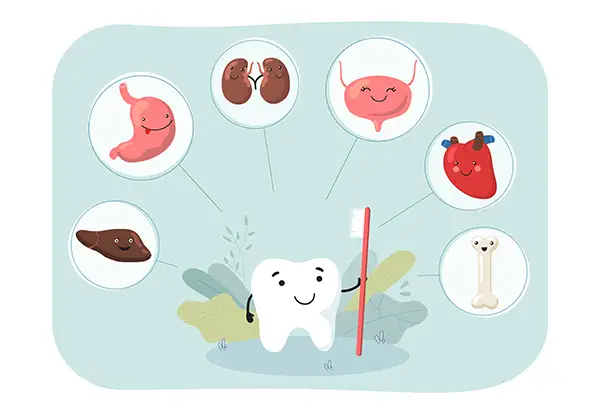 The connection between gum disease and whole-body health is one of the most researched topics in modern dentistry, and the evidence is now strong enough that ignoring it would do a disservice to anyone living with chronic periodontal inflammation. What was once treated as a strictly local problem in the mouth turns out to influence (and be influenced by) the cardiovascular system, blood sugar control, pregnancy outcomes, respiratory infections, and possibly even cognitive aging. The connection between gum disease and whole-body health is one of the most researched topics in modern dentistry, and the evidence is now strong enough that ignoring it would do a disservice to anyone living with chronic periodontal inflammation. What was once treated as a strictly local problem in the mouth turns out to influence (and be influenced by) the cardiovascular system, blood sugar control, pregnancy outcomes, respiratory infections, and possibly even cognitive aging.
For our patients in Tuscumbia, AL, this matters in a very practical way. Treating gum disease isn’t just about saving teeth. It’s about lowering chronic inflammation in one of the few places in the body where it can be physically and repeatedly removed. This guide walks through what the research shows, what it doesn’t prove, and how routine periodontal care fits into the broader picture of staying healthy.
On This Page
The Oral-Systemic Connection: What Research Shows
For most of dental history, the mouth was treated almost as a separate compartment of the body. The last 25 years of research have made it clear that the connections run deep. Inflammation that starts in the gums doesn’t stay in the gums. Bacteria from infected periodontal pockets can enter the bloodstream during everyday actions like chewing and brushing, traveling to other parts of the body and triggering immune responses.
Some clarification is important here. Most of these connections are associations, meaning research has consistently found that people with periodontal disease have higher rates of certain conditions than those without. Association is not the same as causation. Some of these links likely reflect shared risk factors such as smoking, diabetes, and general inflammation, while others suggest gum disease actively contributes to disease elsewhere in the body. The mainstream medical and dental view is that treating gum disease is good for overall health regardless of which direction the arrow ultimately points.
How Gum Disease Progresses
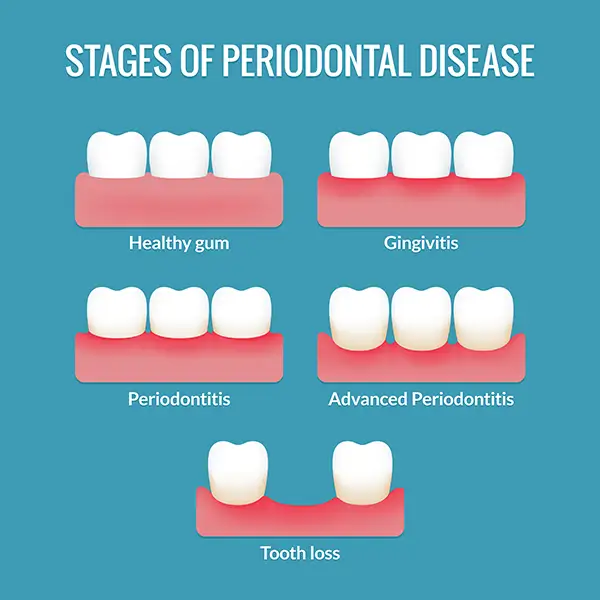 Gum disease doesn’t appear overnight. It develops in clear stages, and the earlier it’s caught, the easier it is to reverse. Gum disease doesn’t appear overnight. It develops in clear stages, and the earlier it’s caught, the easier it is to reverse.
Healthy gums are pink, firm, and don’t bleed when brushed or flossed. From there, the progression usually moves through three stages.
Gingivitis is the earliest. Plaque builds up along the gum line, causing redness, mild swelling, and bleeding when brushing or flossing. At this stage, the damage is fully reversible with a professional cleaning and consistent home care. Most people pass through gingivitis at some point and recover with no lasting effect.
Early periodontitis is when the inflammation spreads below the gum line and the supporting bone around the teeth begins to lose density. Pockets form between the teeth and gums, trapping more bacteria. Bone loss at this stage is small but permanent unless arrested through treatment.
Moderate to advanced periodontitis involves deeper pockets (often 5mm or more), significant bone loss, gum recession, and eventually tooth mobility. Teeth may shift, food may catch where it didn’t before, and chronic bad breath often appears. At this stage, scaling and root planing or, in some cases, surgical treatment is needed to halt progression.
The takeaway is straightforward: gingivitis is reversible. Periodontitis is manageable but no longer fully reversible. The earlier the intervention, the better the outcome.
Major Whole-Body Health Connections
These are the most studied connections between periodontal disease and broader health. Some have strong evidence; others are still being investigated. We describe each carefully because the framing matters.
Cardiovascular Health
The link between gum disease and cardiovascular disease is one of the strongest associations in the research. Studies have repeatedly found that people with moderate to severe periodontitis experience higher rates of heart attack, stroke, and other cardiovascular events than those with healthy gums. Two mechanisms are most often discussed: chronic low-grade inflammation throughout the body, and bacteria from gum infections entering the bloodstream and contributing to arterial plaque. The American Heart Association has acknowledged the association while stopping short of calling it causal. The practical conclusion most cardiologists and dentists agree on is that treating gum disease is one more useful step in a broader cardiovascular risk-reduction strategy.
Diabetes (Bidirectional)
The diabetes connection is one of the few where the relationship clearly runs in both directions. Uncontrolled diabetes makes gum disease worse and harder to treat because elevated blood sugar feeds the bacteria responsible for infection and impairs the body’s healing response. In the other direction, untreated gum disease can worsen blood sugar control and make diabetes harder to manage. Studies have shown that successful periodontal treatment can lead to small but meaningful improvements in HbA1c, the standard long-term blood sugar marker. For patients managing diabetes, healthy gums are part of the bigger picture of disease control.
Pregnancy Outcomes
Research has linked moderate to severe periodontal disease in pregnant patients to higher rates of preterm birth and low birth weight. The likely mechanism involves the same inflammatory and bacterial pathways that connect gum disease to other systemic conditions. Hormonal changes during pregnancy also make gums more reactive to plaque, which is why “pregnancy gingivitis” is common. Dental cleanings during pregnancy are safe and encouraged, particularly in the second trimester, and treating any gum inflammation early is now considered part of standard prenatal care guidance.
Respiratory Infections
Bacteria from infected gums can be inhaled or aspirated into the lungs, particularly in older adults or those with compromised swallowing. This has been associated with higher rates of pneumonia, especially hospital-acquired and aspiration pneumonia in elderly patients. Good oral hygiene reduces the bacterial load in the mouth and lowers this risk, which is part of why long-term care facilities are increasingly emphasizing oral care for their residents.
Cognitive Health (Emerging Research)
The newest area of investigation looks at possible links between periodontal disease and Alzheimer’s or other forms of cognitive decline. Some studies have identified periodontal bacteria in the brain tissue of Alzheimer’s patients, raising the possibility that chronic oral inflammation may play a role. This research is genuinely early, and it would be misleading to call it settled science. What is fair to say is that it’s one more reason to take chronic gum inflammation seriously rather than dismissing it as a minor cosmetic issue.
Recognizing Gum Disease Early
Most people don’t notice gum disease until it’s well underway because the early stages are usually painless. Knowing what to look for can mean catching it when it’s still fully reversible.
Bleeding when brushing or flossing is the single most common early sign and the one most often dismissed as “normal” or as a sign of brushing too hard. Healthy gums don’t bleed.
Persistent bad breath that doesn’t respond to brushing or mouthwash often signals bacteria living in periodontal pockets below the gum line.
Red, swollen, or tender gums are an early visual cue. Healthy gums are pink and firm; color change is one of the first things to shift.
Gum recession shows up as teeth that appear longer than they used to, or new sensitivity at the gum line. Both indicate that gum tissue is pulling back from the teeth.
Loose teeth or a shifting bite indicate bone loss and are usually a later sign. Anyone noticing this should schedule a dental exam promptly rather than waiting for a regular six-month visit.
A routine dental visit can catch the earliest signs long before any of these become noticeable to you. Pocket depth measurements, bone level evaluations on X-rays, and visual inspection give us an accurate snapshot of where things stand and how they’re changing over time.
How Regular Care Protects Both
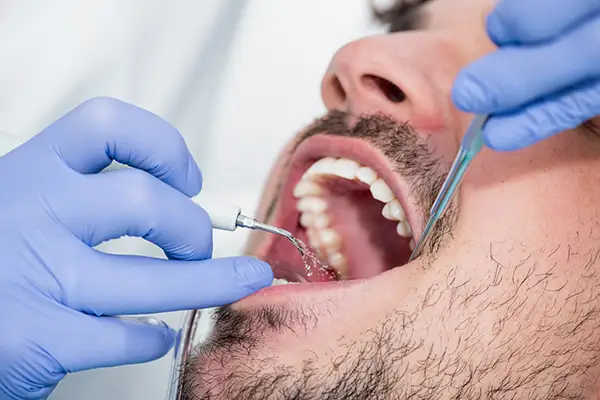 Routine professional dental cleanings do far more than freshen breath and polish teeth. They remove the hardened tartar that home brushing can’t touch, allowing the gums to heal and reducing the bacterial burden that contributes to systemic inflammation. Routine professional dental cleanings do far more than freshen breath and polish teeth. They remove the hardened tartar that home brushing can’t touch, allowing the gums to heal and reducing the bacterial burden that contributes to systemic inflammation.
For patients with existing gum disease, periodontal maintenance cleanings (typically every three to four months) keep pocket depths under control and prevent progression. Each appointment also includes a quick oral cancer screening and an opportunity to identify other changes early.
The connection between oral and overall health is one of the more useful frameworks to come out of modern medicine. The mouth is one of the few places in the body where chronic inflammation can be physically removed by a trained professional on a predictable schedule. Most of us will never undergo a procedure that directly touches our cardiovascular system. We can have a cleaning that touches our gum tissue twice a year, and over a lifetime that adds up.
Taking the Next Step
You don’t have to memorize the mechanisms behind every oral-systemic link. The practical takeaway is simpler: healthy gums support a healthier body, and treating gum disease is one of the most accessible steps available for protecting your overall health. Our team at Singing River Dentistry sees patients across Tuscumbia, Florence, Muscle Shoals, and the surrounding area for periodontal evaluations and cleanings. Call 256-383-0377 or get in touch with our Tuscumbia office to schedule a visit.
Frequently Asked Questions
Does treating gum disease actually lower my risk of heart disease?
Research suggests a clear association between gum disease and cardiovascular events, but no study has yet proven that treating gum disease directly prevents heart attacks. What is clear is that periodontal treatment lowers chronic inflammation and bacterial exposure, both of which are part of cardiovascular risk. Most cardiologists and dentists consider it a useful piece of a broader heart-healthy strategy rather than a standalone intervention.
Can pregnancy hormones really cause gum problems?
Yes. Hormonal changes during pregnancy make gums more reactive to plaque, leading to a condition called pregnancy gingivitis. Bleeding, tenderness, and mild swelling are common. Careful brushing, flossing, and a routine cleaning typically resolve it. Dental cleanings during pregnancy are safe and often actively recommended, particularly in the second trimester.
If I have diabetes, do I need more frequent dental visits?
Often, yes. Diabetes and gum disease feed each other, so most dentists recommend cleanings every three to four months for patients with diabetes rather than the standard six-month interval. This more frequent schedule helps keep periodontal inflammation in check and can support better blood sugar control. Your dentist and physician can coordinate based on your specific situation.
Is gingivitis really fully reversible?
Yes, completely. At the gingivitis stage, the inflammation is in the soft tissue only, with no bone loss involved. A professional cleaning combined with consistent daily brushing and flossing typically resolves it within a week or two. Once bone loss begins, the disease is no longer fully reversible, but its progression can still be stopped with proper treatment.
How is periodontitis different from gingivitis?
Gingivitis is inflammation of the gum tissue alone. Periodontitis is inflammation that has spread below the gum line and started destroying the bone and ligaments holding the teeth in place. Gingivitis is reversible; periodontitis can be managed and halted, but the bone loss it causes is permanent.
What does a periodontal maintenance visit involve?
It’s similar to a routine cleaning, but the focus is on the periodontal pockets that formed during active gum disease. We clean below the gum line where home care can’t reach, monitor pocket depths to make sure they’re stable, and watch for any signs of recurrence. These visits are typically scheduled every three to four months for patients with a history of periodontitis.
|
|

