Sleep Apnea and Oral Health: What You Should Know
Posted on 6/7/2026 by SRD Russellville |
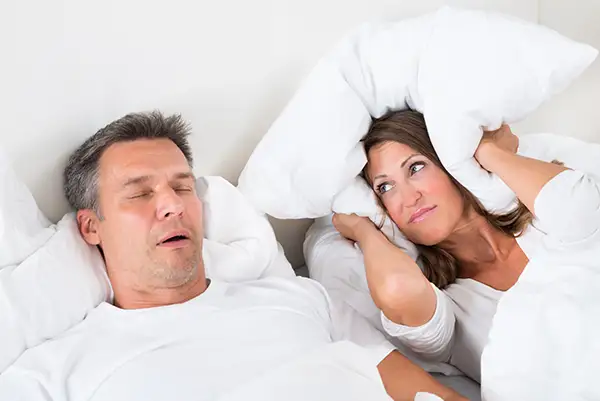 Sleep apnea has a clear connection to oral health that many patients in Russellville don’t realize, and the dental office is often the first place that signs of sleep-disordered breathing get noticed. Snoring may be what brings the issue to mind, but the inside of the mouth holds clues that dentists are specifically trained to recognize. Worn teeth, a scalloped tongue, a narrow palate, and morning headaches can all point toward an airway problem long before a sleep study confirms it. Sleep apnea has a clear connection to oral health that many patients in Russellville don’t realize, and the dental office is often the first place that signs of sleep-disordered breathing get noticed. Snoring may be what brings the issue to mind, but the inside of the mouth holds clues that dentists are specifically trained to recognize. Worn teeth, a scalloped tongue, a narrow palate, and morning headaches can all point toward an airway problem long before a sleep study confirms it.
This post walks through how sleep apnea shows up at dental exams, why the connection makes anatomical sense, and what role dental care can play in treatment. If a partner has complained about your snoring, or if any of the signs we cover sound familiar, you’ll come away with a clearer picture of when it’s worth bringing up at your next dental visit.
On This Page
What Sleep Apnea Is
Sleep apnea is more than snoring. It involves repeated pauses in breathing during sleep, sometimes for ten seconds or longer, often hundreds of times a night. The most common form is obstructive sleep apnea, where the soft tissues at the back of the throat collapse and block the airway during sleep. Each pause forces the brain to briefly rouse the body enough to restart breathing, which is why so many patients with the condition feel unrested no matter how many hours they spent in bed.
The consequences reach well beyond fatigue. Untreated obstructive sleep apnea is linked to higher blood pressure, increased cardiovascular risk, daytime sleepiness that affects driving and work, and cognitive issues like memory and focus problems. It’s a serious condition, which is why catching it early matters. The challenge is that the person experiencing it usually has no memory of what happens at night, so the signs other people notice often come first.
Oral Signs Your Dentist Sees
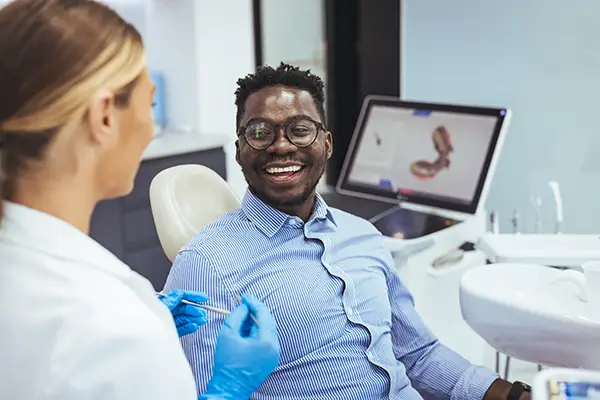 Dentists examine the mouth, jaw, and airway every visit, which puts us in a good position to spot patterns that suggest sleep-disordered breathing. One of the most consistent findings is extensive wear on the chewing surfaces of the teeth. This pattern is strongly associated with nighttime teeth grinding, and a growing body of research links that grinding to sleep-disordered breathing. The jaw appears to clench and shift as a reflex to reopen a partially blocked airway. Dentists examine the mouth, jaw, and airway every visit, which puts us in a good position to spot patterns that suggest sleep-disordered breathing. One of the most consistent findings is extensive wear on the chewing surfaces of the teeth. This pattern is strongly associated with nighttime teeth grinding, and a growing body of research links that grinding to sleep-disordered breathing. The jaw appears to clench and shift as a reflex to reopen a partially blocked airway.
A scalloped tongue, with visible indentations along the edges from being pressed against the teeth, is another signal. So is a large or low-set tongue paired with a narrow or high-arched palate, both of which crowd the space the airway needs. Redness or inflammation in the back of the throat from snoring vibration, dry mouth on waking, and frequent morning headaches are all consistent with disturbed breathing during sleep. TMJ symptoms like jaw stiffness or facial tension can also appear because the muscles around the jaw have been working all night.
Any one of these on its own is not a diagnosis. Several of them together, especially with a snoring history, are what move the conversation toward a sleep evaluation.
Why the Dental Connection Works
The anatomy that determines whether your airway stays open during sleep is the same anatomy a dentist looks at every visit. The soft palate, uvula, tongue, throat opening, and how the upper and lower jaws relate to one another all contribute to airway space. When we examine the mouth, we’re already evaluating the structures that drive airway risk, even when sleep isn’t the main reason for the visit.
There’s also a frequency advantage. Most people see their dentist more often than they see any other type of medical provider, and we have the benefit of comparing what we see now to what was charted at past visits. A new wear pattern, a tongue that appears larger than it did a year ago, or a pattern of complaints about morning fatigue can stand out against that baseline. The dental office isn’t where sleep apnea is diagnosed, but it is often where the first useful conversation happens.
Dental Care and Sleep Apnea
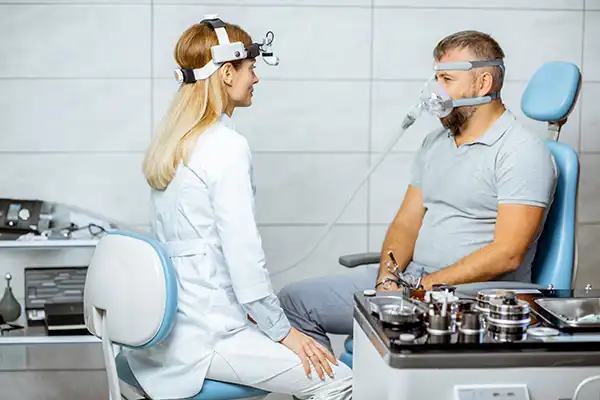 Once sleep apnea has been diagnosed by a sleep medicine physician (typically following a sleep study), dental care plays a real role in treatment. The main tool on the dental side is a custom oral appliance, a device worn at night that gently holds the lower jaw slightly forward to keep the airway open. For patients with mild to moderate obstructive sleep apnea, oral appliances are an established treatment option recognized in guidelines from the American Academy of Sleep Medicine. For patients who have tried CPAP and can’t tolerate it, an oral appliance can be a meaningful alternative. Once sleep apnea has been diagnosed by a sleep medicine physician (typically following a sleep study), dental care plays a real role in treatment. The main tool on the dental side is a custom oral appliance, a device worn at night that gently holds the lower jaw slightly forward to keep the airway open. For patients with mild to moderate obstructive sleep apnea, oral appliances are an established treatment option recognized in guidelines from the American Academy of Sleep Medicine. For patients who have tried CPAP and can’t tolerate it, an oral appliance can be a meaningful alternative.
Severe sleep apnea is a different conversation. CPAP remains the gold standard for those cases, and some patients may need surgical evaluation as well. We work alongside sleep physicians rather than around them. When a patient comes to us with a diagnosis and a referral for an oral appliance, we coordinate with their sleep team so the device is tested and adjusted properly, and we monitor for any effects on the bite and jaw over time. The goal is treatment that actually works at night and is sustainable for the long run.
When to Bring It Up
If a partner has mentioned that you snore loudly, gasp, or appear to stop breathing during sleep, that’s a clear cue to raise it at your next dental exam. The same goes for waking up unrested no matter how long you slept, frequent morning headaches, daytime sleepiness that doesn’t make sense given your sleep hours, and trouble focusing or remembering things during the day.
There’s no downside to mentioning these symptoms. We’ll look for the physical signs discussed above, ask a few targeted questions, and if the picture is consistent with sleep-disordered breathing, we’ll suggest a referral to a sleep medicine physician for proper evaluation. From there, you and your sleep team can decide whether testing makes sense. Many patients are surprised by how much better they feel once a long-standing sleep issue is finally identified and treated.
Talking With Our Russellville Team
If anything in this post sounds familiar, we’d be glad to take a closer look at the next visit. Call Singing River Dentistry in Russellville at 256-332-6888 or schedule a visit at our Russellville office to get started. A short conversation and a focused exam can be the first step toward better sleep and better overall health.
Frequently Asked Questions
Can a dentist diagnose sleep apnea?
No. A formal diagnosis of sleep apnea requires a sleep study and a sleep medicine physician. What a dentist can do is recognize the oral and airway signs that suggest sleep-disordered breathing and refer you for proper testing. We can also provide oral appliance treatment after diagnosis when your sleep physician recommends it.
Is an oral appliance as effective as a CPAP machine?
For mild to moderate obstructive sleep apnea, a properly fitted oral appliance can be a comparable option, and many patients tolerate it far better than CPAP, which often improves real-world results. For severe sleep apnea, CPAP remains the most effective treatment. Your sleep physician helps decide which option fits your case.
What does a sleep apnea oral appliance look like?
It resembles a night mouth guard, but it’s designed to hold the lower jaw in a slightly forward position to keep the airway open during sleep. Most appliances are custom-fitted from impressions or scans of your teeth, made of medical-grade plastic, and adjustable so we can fine-tune the jaw position over follow-up visits.
Can children have sleep apnea?
Yes. Pediatric sleep apnea is often related to enlarged tonsils or adenoids and can show up as loud snoring, restless sleep, mouth breathing, bedwetting, and behavioral or attention issues during the day. If you’re noticing any of these patterns, mention it at your child’s next dental visit and follow up with their pediatrician.
Will I have to wear an oral appliance forever?
For most patients, yes. Sleep apnea is a chronic condition, and the appliance only works while it’s being worn. Some patients can reduce their reliance on a device through significant weight loss or, in some cases, surgical correction of airway issues, but that’s a conversation to have with your sleep physician.
|
|